Friday, October 11, 2013

5 reasons Singaporeans are still not happy

Singapore – In the last half decade, Singaporeans haven’t become much happier.

This is according to the latest annual Work Happiness Indicator 2013 by JobsCentral, which found workers in Singapore are only marginally happier in 2013 than they were during the height of the recession in 2009.

In 2009, the overall work happiness rating was 56.4, and today this number has only inched up slightly to 57.9.

Do these findings reveal that there is a serious disconnect between what employees want and what jobs are able to provide?

“This is a worrying trend, as a marginally happy workforce would have repurcussions on work productivity, innovation and Singapore’s economic growth in the longer term,” said Lim Der Shing, CEO of JobsCentral Group.

Other findings from the survey include:
1. Singaporeans approaching retirement are the unhappiest of the bunch Local workers are most miserable at work if they are between 51 and 60 years old, as they scored the lowest on the happiness index at 55.5 – a 12% drop since 2009.
But,on the other hand, those aged 61 and above were the happiest.

2. Money is still king, but Gen Y want “advancement” while Gen X want “work-life balance”
Singaporeans want money, that much is clear, as every generation stated salary is the most important aspect of any job. But Generation X employees are also very big on work-life balance, which is no surprise.
In contrast, Gen Y employees rank work-life balance in fourth place, favouring advancement opportunities in their career after a good salary.

3. But salaries and career advancement cause the most dissatisfaction We want the big bucks and the high flying career and when they don’t come, we’re miserable.
The report states both of these things cause the most dissatisfaction for workers, with many citing the rising cost of living as a reason for needing to keep increasing their salaries.

4. Singaporeans need $10,000 a month to be happy
Those earning $10,000 and above each month are really, really happy. They also have one of the highest increases in work happiness compared to 2009. In contrast, those who earn between $5,000 and $5,999 monthly have the greatest decline in happiness levels.

5. Local lawyers are really unhappy Despite the higher salaries that many lawyer draw, employees in the legal job function showed the largest decline in happiness, with a 6% decrease in overall work happiness since 2009.

Source: HumanResources

Tuesday, October 08, 2013

Which job pays Singaporeans more than anywhere else in the world?

Singapore - As one of the most respected professions in the country, teachers here are found to be paid the highest salaries in the world.

According to the 2013 Global Teacher Status Index by Varkey Gems Foundation, Singaporean teachers are being paid an average of US$45,755 (S$57,072) annually - the highest among the 21 countries surveyed.

Countries such as the United States (US$44,917), South Korea (US$43,874) and Japan (US$43,775), were a few of the other top earners.

The survey found an overwhelming 95% of countries perceived their teachers to be "paid a wage in excess of the actual wage the thought they received".

However, the report added Singaporeans, similar to citizens from South Korea, Japan, Israel and the US, expected their teachers to earn less than they thought.

Locally, Singaporeans believe the fair wage for teachers should be below what it currently is, by as much as 14%.

But those sentiments did not stop Singapore from coming in seventh place globally, with a score of 46.3 in this year's Teachers Status Index, which took into consideration several components such as teachers' status, perception of teachers' rewards, and the Programme for International Student Assessment ranking.

Singaporean teachers also ranked the country's education system highly, placing it third highest, scoring 6.7 out of 10. Additionally, only a small percentage in Singapore believe children do not respect their teachers, the second lowest in the world, and only 20% of teachers would not encourage their own children to follow in their footsteps.

Globally, China took the first place on the index rankings, with a perfect score of 100, followed by Greece (73.7%), Turkey (68%), South Korea (62%) and New Zealand (54%).

This article is taken from Human Resources' online net and written by Amos Seah. 

Tuesday, July 10, 2012

2012 Social Recruiting Survey - jobvite.com

The impact of Social media for recruiting(at least in the US) has progressively become the most dominant factor for many companies to find and hire quality candidates. According to the 2012 annual Social Recruiting Survey from Jobvite:

+ 92% of respondents use or plan to use social media for recruiting, an increase of almost ten percent from the 83% using social recruiting in 2010.

+ 73% have successfully hired a candidate through social networks, making social recruiting a highly effective source of quality new hires.

+ A large majority of recruiters (71%) consider themselves savvy in social recruiting, having a sizeable understanding of what to look for in social profiles.

+ 49% of recruiters who implemented social recruiting saw an increase in the quantity of candidates, and 43% noted a surge in the quality of candidates.


Some other notable findings in the 2012 annual Social Recruiting Survey from Jobvite:

- Facebook is gaining grounds in 2012 with 66% share and Twitter at 54% but the undisputed king of social network recruiting is and continues to be LinkedIn at 93%!

- Since implementing social recruiting, 20% reported taking less time to hire while 49% saw an increase in quantity of candidates and 43% saw an increase in quality of hire.

- 89% of respondents have made a hire thorugh LinkedIn, 26% thorugh Facebook and 15% through Twitter.

- 86% of recuiters are likely to look at social profiles when reviewing candidates


"As recruiters continue to collect more knowledge on social recruiting best practices, the number of quality hires acquired through social media increases. The role candidates’ social activity plays in hiring decisions also grows in importance. Hiring in and of itself has broadened its reach to include a multitude of social media sources as companies continue to seek out new ways to find and hire the best talent". - Jobvite.


Monday, July 02, 2012

European bankers seek refuge in Singapore

Singapore – As the banking crisis continues to loom in Europe, bankers are finding new locations to set up camp while waiting for the storm to ride out.

CNBC reported recruitment firms have seen a rise in the number of European bankers keen on relocating to Singapore, with Stella Tang, director at Robert Half, witnessing a 20% jump in the number of those wanting to move. She added most firms here are planning to increase their headcount this year.

Hudson, on the other hand, have seen a 50% increase in the number of queries for Singapore-based jobs. “The market conditions in places like Europe and the U.K. continue to deteriorate and there is a perception out there that market conditions are significantly better in Singapore,” Craig Brewer, Director of Banking, Financial Services & Legal at Hudson said.

However, despite the strong interest to relocate here, European bankers must be prepared to take a pay cut of anything from 10% to 30%. But that may not be enough to put them off, as Andrew Norton, regional manager at Michael Page says bankers are now willing to forgo an expat package or additional allowances.

Aside from expat bankers keen on coming into the region, more Asian bankers are also returning home, many driven by the same doom and gloom currently shadowing the US and European markets.

“They [Asian-born bankers] feel the risk-reward trade-off is better and that they can add more value through local expertise and language skills,” Norton said.

Wednesday, September 28, 2011

Singapore - most competitive IT industry in APAC

Singapore has sailed past Australia to become the most comepetitive economy in the Asia-Pacific in information technology(IT).

The results come from this year's edition of the Economist Intelligence Unit's IT Industry Competitiveness Index. The index benchmarks 66 economies on a series of indicators covering critical foundation areas for IT innovation, such as overall business environment, IT infrastructure and human capital.


  • Singapore rose 6 places to become the third-most competitive IT market in the world

  • Singapore achieved its third-place global ranking on the strength of its research-and-development environment, which is ranked fifth in the world

  • Two thirds of the world's biggest 100 IT firms have a presence in Singapore

  • Singapore also scored well because of its support for IT-industry development, where it is ranked 5th in the world

  • Singapore was ranked 9th in the world and 2nd in the Asia-Pacific in 2009

Wednesday, August 31, 2011

Singapore banks still hiring, but cautiously, amid current gloom

Banks in Singapore say they will keep hiring staff despite the current gloom.

This is a breath of fresh air, amid the job cuts that have swept the United States and Europe in recent weeks. An estimated 50,000 jobs have so far been affected in banks such as Credit Suisse, HSBC, Barclays, Royal Bank of Scotland and Goldman Sachs.

As in 2008, banks worldwide are in the eye of the gathering financial storm.

However, despite their relatively upbeat outlook, banks here have added a caveat: Hiring in the next few months will be done more cautiously, in the light of the global economic uncertainties.


Source: Straits Time

Thursday, July 28, 2011

Leading Indian CEOs

Some of the leading global Indian business leaders that are making a mark at a global corporate levels are -
(SOURCE: TIME, Aug 1 - Aug 8, 2011 Issue)

Kraft Foods - SANJAY KHOSLA.
Mr. Khosla was appointed as Executive Vice President and President, Developing Markets effective August 1, 2010. Prior to that, he served as Executive Vice President and President, Kraft Foods International from January 2007 to July 2010.
Sanjay graduated with a Honors degree of Bachelor of Technology in Electrical Engineering from the Indian Institute of Technology, New Delhi in 1973. In 2007, Sanjay was honored as a Distinguished Alumni of IIT Delhi. In 1998, Sanjay completed the Harvard University Advanced Management Program.

ArcelorMittal - LAKSHMI MITTAL
Lakshmi Narayan Mittal (born 15 June 1950)[4] is an Indian steel magnate. He is the chairman and chief executive officer of ArcelorMittal, the world’s largest steelmaking company.
Mittal is the richest man in the United Kingdom, second richest man in Europe and is presently the sixth richest individual in the world with a personal wealth of US$31.1 billion.
Lakshmi Niwas Mittal was born into a Marwari business family in Churu district of Rajasthan, India. His family moved from (Rajgarh)Sadulpur, Rajasthan to Calcutta in West Bengal. He graduated from St. Xavier's College, Calcutta where he graduated with a Bachelor of Commerce degree in business and accounting with first class.

Motorola Mobility - SANJAY JHA
Sanjay K. Jha (born 1963) is Chairman and CEO of Motorola Mobility and previous served as co-chief executive officer of Motorola, Inc. from 2008.
Before joining Motorola, Sanjay Jha was COO of Qualcomm and president of Qualcomm CDMA Technologies (QCT). As COO, Jha was overlooking Corporate Research and Development and Qualcomm Flarion Technologies (QFT) in addition to his role as president of QCT, the chipset and software division of Qualcomm Incorporated.
Sanjay Jha was born in Sultanganj (Bhagalpur) Bihar, the eastern state of India[2] He holds a Ph.D. in Electronic and Electrical Engineering from the University of Strathclyde, Scotland. He received his Bachelor of Science degree in Engineering from the University of Liverpool, England.

Pepsico - INDRA NOOYI
Indra Krishnamurthy Nooyi (born 28 October 1955) is an Indian-born American executive. She is the current Chairman and Chief Executive Officer of PepsiCo.
Nooyi was named on Wall Street Journal's list of 50 women to watch in 2007 and 2008, and was listed among Time's 100 Most Influential People in The World in 2007 and 2008. Forbes named her the #3 most powerful woman in 2008. Fortune ranked her the #1 most powerful woman in business in 2009 and 2010. On the 7th of October 2010 Forbes magazine ranked her the 6th most powerful woman in the world.
Indra Nooyi was born in Chennai, Tamil Nadu, India. She completed her schooling from Holy Angels AIHSS, Chennai. She received a Bachelor's degree in Physics, Chemistry and Mathematics from Madras Christian College in 1974 and a Post Graduate Diploma in Management (MBA) from Indian Institute of Management Calcutta in 1976.

INSEAD - DIPAK JAIN
Dipak C. Jain is the current dean of INSEAD and the former dean of the Kellogg School of Management at Northwestern University.
Jain was born on June 9, 1957, in a small town called Tezpur, Assam, a state in north-eastern part of India. He did his schooling from Rastrabhasa Hindi School at Tezpur.

Harvard - NITIN NOHRIA
Nitin Nohria is the 10th and the current dean of Harvard Business School.
Nohria was born in Nohar, Rajasthan, India. Nohria graduated from St. Columba's School in New Delhi, India following which he earned a B.Tech in Chemical Engineering at the Indian Institute of Technology, Bombay and earned a Ph.D. in Management from the Sloan School of Management, MIT.

Citigroup - VIKRAM PANDIT
Vikram Pandit (born 14 January 1957) is an Indian- American businessman who is the chief executive officer of Citigroup.
Vikram Pandit was born in Nagpur, India, to an affluent Marathi family. He completed his schooling at the Dadar Parsee Youths Assembly High School in Dadar, Mumbai. He moved to the United States when he was sixteen years old to study at Gannon University. He received a B.S. and M.S. in electrical engineering from Columbia University in 1976 and 1977 respectively and an M.B.A in 1980 followed by a Ph.D. in Finance from Columbia Business School in 1986

Berkshire Hathaway - AJIT JAIN
Ajit Jain (born, July 23, 1951) is a businessman who currently heads several reinsurance businesses for Berkshire Hathaway and had once been touted as a possible successor to Warren Buffett.
Ajit Jain was raised in India's coastal state of Orissa. He graduated in 1972 from the Indian Institute of Technology Kharagpur with a bachelor's degree in engineering.

Google- NIKESH ARORA
Nikesh Arora is the current Senior Vice President and Chief Business Officer at Google.
Arora received a bachelor's degree in electrical engineering from Institute of Technology, Banaras Hindu University (now IIT BHU) in Varanasi, India in 1989. He also holds a master's degree from Boston College and an MBA from Northeastern University, both of which were awarded with distinction.

Facts: In a study of S&P 500 companies, Egon Zehnder found
- more Indian CEOs than any other nationality except American.
- Indians lead seven companies, Canadians, four.

Among the C-suite executives in the 2009 FORTUNE 500 were two mainland Chinese, two North American Chinese and 13 Indians.

Here in Singapore following are the notable CEO's appointed in recent years and remarkably post GFC. The list could be much longer if we were to include those
appointments at 1 or 2 level down.

DBS Group Holdings - PIYUSH GUPTA.
Piyush Gupta, was appointed as Chief Executive Officer (CEO) as of November 2009.
Gupta spent over two-thirds of his 27-year career in South East Asia and Hong Kong, including eight years in Singapore.
Gupta was Citi’s CEO for South East Asia-Pacific, covering Asean (Singapore, Malaysia, Philippines, Indonesia, Thailand, Vietnam and Brunei), Australia, New Zealand and Guam. In this role, his responsibilities encompass all of Citi’s businesses including Financial Markets, Corporate and Investment Banking, Transaction Services, Credit Cards, Retail Banking and Wealth Management.

ANZ Banking Group - VISHNU SHAHANEY.
Vishnu Shahaney, previously managing director, specialised lending and loan product for ANZ in Asia Pacific, Europe and America, was appointed as CEO for its Singapore
office as of October 2010.

SINGAPORE MERCANTILE EXCHANGE(SMX) – V HARIHARAN.
Mr. V Hariharan was appointed as the interim CEO with effect from June 20, 2011.
Prior to joining SMZ he has held pivotal roles within the Financial Technologies Group -- a leading provider of trading technology solutions and the creator of several exchange and support eco-system ventures across India, Middle East, Asia and Africa.

Citibank - SHIRISH APTE.
Shirish Apte was appointed CEO of Citi Asia Pacific as of July 2009.
Apte moves to Asia-Pacific after guiding Citi in other emerging markets. He served as CEO of Citi's Central and Eastern Europe region.
Apte has served in several senior management roles in more than 26 years with Citi, including as CEO of Central and Eastern Europe, Middle East and Africa Citi markets and banking.

Please feel free to write in if any notable appointments are missing from the list to neitham(at)gmail(dot)com, alternately kindly leave your comments.

Thursday, October 07, 2010

Align consultants and culture for best results

The most successful recruitment companies are those that have a positive culture, alignment with their people, and "good intentions", according to performance expert Sally-Anne Cotton.

Accordingly to Cotton, people perform at their best - in a state of 'flow' - when they can bring "all of themselves" to the job, and when the company's needs - and that of clients - balance with the individual's needs.

Cotton, the managing director of Executive Alchemist, says there is "a growing body of evidence that suggests very strongly that we can balance hardline results and the people elements in organisations".

For example, she says, studies have found that:
  • organisations with adaptive cultures (those that are positive, values-driven, respectful and supportive) significantly outperform non-adaptive organisations (those driven by power and competition);
  • "good companies become great" when they are characterised by giving guidance and inspiration, and "living their values" (i.e. values drive decision making), performing 15 times better than the general market (in terms of shareholder return); and
  • the values and drivers of top-performing companies include client satisfaction, collaboration, integrity and teamwork, while companies are more likely to fail when employees face a culture of blame, short-term focus, internal competition and information hoarding.

When people come to work feeling supported, it has a huge impact on their performance, she says.

But not only does a company need to have a positive culture, it also needs its values to be aligned with the people it employs.

For example, if a company wants its team members to collaborate, it needs to put in place a system to reward collaboration (as opposed to rewarding individual results), she says.

Finally, Cotton says, successful sales-based organisations are those that focus on a "common good" - they want client transactions to be win-win situations, rather than one-sided.

Gone are the days of "getting a sale across the line at all costs", because that behaviour doesn't foster long-term relationships and doesn't benefit the business in the long run.

Not a lot of people find real meaning and purpose in what they do, she says, but that's what organisations need to strive.

Source: www.recruiterdaily.com.au

Wednesday, September 15, 2010

Wednesday, August 04, 2010

Researchers' tool: eGrabber eMail-ID Extractor

This I thought is a very handy tool for anyone Researching/Resourcing for email ids and then perhaps for mailing campaigns. This extractor is basically a plug-in to capture email ids from web pages and is free of charge.

The Plug-in installs in your browser toolbar. Clicking it extracts email IDs from the page, de-dupes, sorts and displays them for you in an Excel and Outlook friendly format.

Go to this link and down load the plug-in: http://www.egrabber.com/freebies/emailidextractor/

***Happy Hunting folks***

Friday, July 23, 2010

Ever need a phone # quickly? Use Google!

Type in: phonebook: firstname lastname state abbr

Try it out - (if the person's is listed somewhere of course);

Also, while there are many ways & many tools to do this, if you need an email format for a company, type in Google:

"email * * companyname.com"

(Use quotes and replace 'companyname' with the actual co you are trying to find email address formats for. As you scan the results, it will give you email patterns/formats for that company - such as firstname.lastname@company.com or firstinitiallastname@company.com, etc)

- by Gary Cozin

Tuesday, June 01, 2010

Facebook Statistics!

While browsing through a magazine today I came across some statistics on Facebook and it got me really curious so I started googling on Facebook and came up with some interesting stats.

Some of them are listed below -
  • FB is 6 years old (founded in Feb'2004)
  • Over 400 million active users (Only China and India have larger population than FB has members)
  • People spend over 500 billion minutes per month on FB.
  • 700,000 new users everyday which amounts to 21 million new users every month.
  • About 70% of FB users are outside the United States
  • As of June 2010 there are 187 countries with registered FB member
  • While USA tops the list with 123 016 580 members, at the bottom of the pile is Sierra Leone with 5400 members
  • Indonesia has the highest number of users from ASIA with 24 722 360 members and they are just behind the US of A and England.
  • As for tiny Singapore with a population of 4 million we are 38th on the list with 2 253 640 members and user growth of 4.52% from last year. Which is relatively high penetration rate(46.57%).
  • The country with the highest user growth is Laos with an astonishing figure of 82.01% while the lowest user growth is in Namibia with a drop of minus 286.21%
  • The top 3 countries with the highest user growth are Laos, Iraq(38.31%) and South Korea(20.07%)
  • Lastly, the top 3 categories on FB that has the highest number of fans are (sex) Playboy on Facebook - 1 4110 189 fans, (news) CNN on Facebook - 840 628 and lastly (information) Google.com on Facebook - 696 883 fans.

It is rather intriguing that Playboy which falls under the category SEX has the highest number of fans considering the fact that women have always made up a larger share of the FB user base than men! Thats something to ponder upon ..... ;-)
/ta

Saturday, January 09, 2010

Singapore banks on hiring drive!

What most of us in recruitment industry are in the know for the past few months became a headline news this morning as The Straits Times did a check on banks here in Singapore on their recruitment forecast for 2010.

On top of the pile was British-based Barclays Bank, which is leading the hiring resurgence with plans to add more than 500 staff here this year. Most will be employed in the bank’s technology section, in general operations and in finance.

Besides Barclays Bank, notable mentions are DBS with 500 positions, HSBC with 200 senior positions and ANZ Bank with more than 800 staff that will include the staff they will inherit from RBS' retail and commercial businesses.

From local to foreign, small players to big boys, almost all banks operating here have recruitment high on the agenda.

Morgan Stanley, State Bank of India, Standard Chartered Bank and OCBC Bank are just some of the others adding staff.

The outlook definitely seems very upbeat at least for the first half of the year and as for the rest of the year one has to wait and watch how the global economy sustains its recovery momentum.

For the moment, its happy billing days for the recruitment industry here in Singapore and here's wishing everyone a great 'Year of the Tiger' ahead.

*Happy hunting folks!*


Friday, December 11, 2009

Four Sources of Candidates - by Bill Radin

As a recruiter, I’ve found that there are four basic sources of candidates. Or, to put it another way, there are four ways in which I can organize and make best use of my candidate resources. These sources are:

1. Candidates I own.
These are all the people who I already have in my database. I don’t own them in the literal sense, of course. The term “candidates I own” simply applies to the people who are in my contact files—and my files are something that I own.

The candidates I own are the people I already know about or whose contact information, profiles or resumes are in my database. Whenever I start a search, I turn to these people first, not only because they’re the most accessible, but because over the years, I’ve gotten to know many of them, and I’ve qualified them, sent them to interviews, and maybe even placed them.

I feel like if I already have a history with people, and they trust me, and I’ve invested time in developing them, then those relationships will result in better decisions on my part as to whether they’re right for a job. And certainly, someone I have a good working relationship with will make for a more reliable and generous source of referrals. Even someone I’ve only spoken to once a long time ago is an owned candidate, because there’s some degree of history between us.

2. Candidates I rent.
These are candidates whose names or resumes are made available through job boards, resume banks, databases, directories and split networks. I call them “candidates I rent” because they’re in the public domain, and they’re available to any other recruiters who are willing to pay a subscription fee or join a network in order to gain access. Once I make contact with the candidates I rent and import their records into my own files, they can be merged into my community of talent, that is, the candidates I own.

3. Candidates I cultivate or find through original research.
Let’s say I do a Google search and I discover someone who’s written an article or a technical paper and the person’s got really good skills. Or say I get a referral from a candidate who mentions the names of three of his peers during the course of a sourcing call. Or let’s say I visit a trade show, looking for applications engineers and I strike up a conversation with someone at a booth, and she gives me her business card. These are candidates I found through original research, and after I get to know them and add them to my files, they also become candidates I own.

4. Candidates who come to me through my pipeline.
These are people I reach out to or attract by virtue of all the things I’ve done to market my services, advertise my expertise and build my brand and reputation. If you have an account with LinkedIn or Facebook or MySpace or Twitter or any of the social networks, your contacts are a major force in your pipeline.

Pipeline candidates are also the people who visit my Web site and send me their resumes, or respond to a job posting, or ask to receive my newsletter or candidates who are referred to me by word of mouth. Pipeline candidates are people who hear about a workshop I’m giving on interviewing techniques, or see an article I wrote in a trade publication.

I take my pipeline very seriously, and I set it up and maintain it for the express purpose of magnetizing people and drawing them into my community. Once they find me—or we become “friends”—they too, get merged into my files as candidates I own.

The Power of OwnershipI’m a big believer in candidate ownership, because when you own your candidates, you’re less dependent on other sources, and you won’t need to spend your hard-earned cash on rental candidates who are accessible to any number of other recruiters. Given the choice, I’d rather be self-sufficient and in control of my own resources.

Another reason to own your candidates is that—and this is a slightly advanced concept—once your database reaches critical mass, it’ll begin to have an asset value unto itself. And what that means is that your inventory can then be leveraged. So, for example, if a company or a recruiting partner or a third party is looking for a particular type of candidate that you have a reputation for owning, you have leverage. So if you choose to do so, you can earn a higher fee for a placement, or do a split on favorable terms if you decide that sharing the candidates in your database would be a good business decision. With ownership, you have that control. If you’re just renting candidates everyone else is renting, your control becomes very limited or even non-existent. Of course, it goes without saying that this is the strategy that works best for me. The most important thing is to find what works best for you and stick with it.

Thursday, September 03, 2009

Tips - If I've learnt 3 things in recruitment

1. Rejection isn't personal!

2. The longer you procrastinate over something the harder it becomes

3. Sometimes you just have to walk away from a deal


-by Diane Marker, MD, Marker Consulting - www.markerconsulting.com

Source:UK Recruiter Newsletter #419, dated 2 September 2009.

Thursday, August 27, 2009

Microsoft Excel: How to Hide Tabs

If your spreadsheet is shared and used by others, you may want to keep your formulas and some data from being viewed or changed by others. By hiding the tabs that these are located, you can allow others to use your spreadsheet without having to worry about them playing where they don’t belong.

1. Open your saved Excel Spreadsheet.
At the bottom of your spreadsheet, you can see all available tabs. For this example, we will hide the Formulas tab.


2. On your keyboard, press ALT+F11 to bring up the Visual Basic editor.

3. At the top of the left pane, locate the desired tab that is to be hidden and select it.
4. Go to the bottom of the left pane and locate the Properties for the selected tab.

5. Go to the Visible setting and use associated dropdown to select 0 -xlSheetHidden.


6. Go back to the top of the left pane.

7. Right-click VBAProject and select VBAProject Properties.


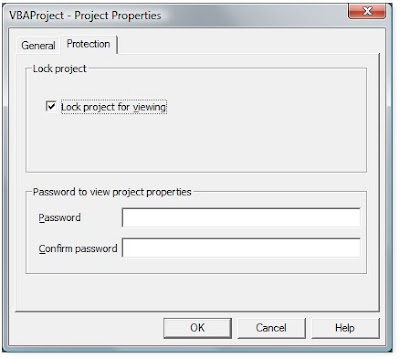
8. Select the Protection tab.


9. Check the Lock project for viewing checkbox.

10. Input a password, repeat it to confirm the password.

11. Click the OK button.

12. Go to the menu, click File and select Save.

When you return to your spreadsheet, you will now see that the tab is hidden.


To make the tab visible again, press ALT+F11 to open the Visual Basic editor. Input the password and change the Visible setting for the tab back to 1 -xlSheetVisible.
Source: Tech-Recipes

Wednesday, August 26, 2009

How I Made 3 Hires with Twitter in 6 Weeks

Article by Megan Hopkins (Full story available on Boolean Black Belt )

Twitter Hire #1

I posted my first requirement for a .Net developer and (I’d have to check my Twitter diary to be certain…and yes, I kept one…stop laughing. No, seriously. Stop.) waited for any sign of life on the other end. It seemed like 17 minutes went by (again, that’s in the diary) and then finally, someone RT’d (“retweeted” for all you newbies) my Tweet. “Holy crap!,” I thought, “This is working.”

Eventually, I had several people retweeting my post that day and by the end of the day, I had five referrals, three interviews, and…wouldn’t you know it…a placement…with a great .Net talent I never would have known otherwise. This is when I started to really believe in the power of Twitter. The fact that this candidate saw my Tweet because someone I didn’t know reposted it blew my mind. I was addicted. So addicted now, in fact, that even as I write this blog post, I am Tweeting about it…well, that and how my dog smells like corn chips.

Twitter Hire #2

My second placement happened much like the first one. I had a position come in that I was on the fence about – partially because I was slammed…and partially because I’m a dev-loving snob (this position was infrastructure…ick!). In any event, I updated my Twitter followers on my newest need and it got retweeted several times. I’ve found it helps to ask for a Tweet to be retweeted but more on this in a second. This was position was slower to fill (it was a “purple squirrel”) but about a week or so after I posted it, I got a message from a candidate (and now Kforce contractor) that was interested.

It seemed he had just been laid off unexpectedly and was now on the market…and was just the purple squirrel I thought I’d never (ever, ever) find. He emailed me his resume and within four hours we had him driving up to Jacksonville from South Florida to interview face to face. He received an offer a day later and he started work the following Wednesday. This was a particular success for me because he was an out of area candidate that I would have never met otherwise, he was one of very few that had his skill set, and it was a perfect match with a brand new client (that coincidentally, came from a Twitter lead). @OrlandoTechNuts was feeling pretty darn good about herself at this point.

Twitter Hire #3

My most recent placement is the one that gets me most excited. I had been recruiting (or stalking) this candidate for about a month (at least!). He was absolutely dead on for a position I was working on (again with a new client) and for some crazy reason, he would not answer his phone, and he would not return my hundreds of voicemails and emails. I briefly contemplated showing up at his house but I was advised against it (seriously…or not). I had just about given up on this candidate (apparently he was too good for me) when I got a direct message on Twitter about a job I had tweeted.

My contact had a friend that was looking and was looking for a reputable recruiter to work with and he saw the RT of my position. He was interested. Well, wouldn’t you know if that the candidate that was interested was the very same candidate that I had been chasing down and losing sleep over (yes, I get very involved in my job). Looks like @OrlandoTechNuts now had the upper hand. For a moment, I thought about acting like I was a jilted ex-girlfriend and not calling him back…but, I am a recruiter. We’ll always call back. Long story short, he FINALLY answered his phone when I called and we got him a job (and a great one!) within two weeks.

Twitter Hire #4 is in the Works!

Stay tuned! I’m very close to getting my fourth Twitter hire in the next week. Assuming our client doesn’t go MIA (again…gotta love that, right recruiters?), I should have another great dev talent working very soon. Like the others, this was a guy that I had never met, nor probably would ever meet, because he is a passive channel candidate and not on the boards…and frankly, he wasn’t too keen on recruiters (until @OrlandoTechNuts got to him, that is!).

Following the right people (and having the right people follow you) along with tweeting relevant information is a great way to build your credibility and it can effectively separate you from the hundreds of other recruiters out there – that is what really helped move this potential hire along.

How to Use Twitter in Recruiting

I look back now and kick myself for not being open to Twitter sooner. It took a while to get Kforce onboard and unblock it for me but once I got going, I was not going to stop. Twitter has become such an integral part of my every day life (even outside of work) and I’m not sure what I’d do or how I’d effectively recruit without it at this point. Sure, I’d manage (after all, David Dunkel didn’t have Twitter and somehow he managed to do ok), but I would not be able to touch nearly as many people and connect with my community as deeply as I have.

Your use of Twitter needs to be approached like any other aspect of recruiting or sales. It is a long term investment and you really have to care to grow and develop your relationships. One of the most common concerns I hear from candidates is that recruiters seem to be all about instant gratification. They tend to view talent as a commodity and lose sight of the fact that they are working with people. The relationship is not important and there is a strong need to take your “kill” back to the den as quickly as possible.

If you go into it (it being Twitter, in this case) thinking, “What am I going to get out of this and how soon?” you might as well stop now. Chances are you aren’t going to walk away with an immediate “reward”. I think the majority of my success has stemmed from actually caring about the connections I make and what is going on in my (IT) community.

I try my best to contribute daily (and this time I’m not referring to my Tweets about my smelly dog) and demonstrate that I am very much invested in my community. It never hurts to be engaging. Ask questions, respond to Tweets that interest you, and basically, take an active interest in what your fellow Twitter folk are doing. It has to be more than just posting a job opening you have. It never hurts to RT other people’s Tweets, either. That goes a long way.

Now, when you do decide to Tweet your positions, make sure those Tweets count. Make sure you don’t use all 140 characters (that is a pain to RT…and I learned that the hard way in the beginning) and if you want others to RT your positions, ask for it. I always do and people are more than willing to oblige.

Of course there is also the risk that Twitter can drain all of your time, but so far, even though I heavily rely on it, that really hasn’t been an issue. I do keep it up all day at work…and on my phone…but I check it once an hour or so to see if there is anything relevant I can comment on (or occasionally heckle some of my dev friends) and then I post something as I feel like it. I’d say if you added up the collective amount of time I spend tweeting, it is around an hour or so per day. Considering that I’m a full time recruiter who works about 60+ hours a week, that’s a relatively small investment and the rewards have been huge…plus you make some pretty interesting friends along the way.

Final Thoughts

At the end of the day, I really don’t think there is just one way to leverage Twitter successfully. My experience was very much trial and error and so far, I’ve managed pretty well (other than making a few rookie errors). Like anything, stick to the basics. Remember that relationships are king and you can’t make a withdrawal if you never make a deposit. If you keep this in mind as you Tweet, I promise you will be right on track to make 3 hires in 6 weeks using Twitter too. Trust me. After all, I am always (almost) right.

About the Author

Megan Hopkins is a senior technical recruiter working for Kforce in Orlando. She specializes in recruiting .Net developers and is very active in the Microsoft development community, regularly attending events such as Orlando.Net User Group and the Tampa ASP.Net MVC Developer User Group at Microsoft - she’s also the exclusive sponsor of these groups and several more.


Friday, August 21, 2009

Facebook used to screen potential employees!

US - More employers are using social networking sites such as Facebook to screen potential employees, says a new CareerBuilder survey.
Forty-five percent of 2,600 hiring managers report using these networking sites to research job candidates, a huge increase from 22% last year. On top of that, 11% plan to start using these sites for screening.
Out of those that conduct background checks and online searches of job candidates, 29% use Facebook, 26% use LinkedIn and 21% use MySpace. 11% of respondents search blogs, while 7% follow candidates on Twitter.
The industries that screen job candidates via social networking sites or search engines vary; those which are most likely include jobs specialising in technology and sensitive information. For instance, 63% of employers in the information technology industry screen candidates, while 53% in professional and business services do so.
Thirty-five percent of employers report finding content on these social networking sites that caused them not to hire candidates. Some reasons include finding out candidates posted provocative or inappropriate photographs or information, bad-mouthed previous employers, co-workers or clients, and lied about their qualifications. Also, 14% of employers have disregarded candidates because they sent a message using an emoticon, while 16% had refused to hire because candidates used text language in an email or job application.

On the flip side, 18% of employers have found content on social networking sites that made them hire candidates. Most commonly, the candidates' profiles provided a good feel of their personality and fit, or their profiles supported their professional qualifications.


Wednesday, August 19, 2009

Happy hiring days are here again!

Singapore: There's something positive, bullish and a general feeling of subdued excitement in everyone's outlook these past few weeks more so within the recruitment community.

Look around and you will see, hear and feel the difference in the air as compared to few months back.

News are abound with confident boosting plans, actions and positive forecast for hiring needs.

For some this week itself has brought in loads of business in the form of new assignments and projects that they've not seen in the past 2 months combine. Pipelines are very strong so are the billing numbers.

The feeling that I get when I spoke to couple of recruiters is that they are going to end with a strong quarter. Which needless to say is a very welcoming change indeed.

I am very confident that this positive momentum is going to see us through the remaining quarter and take off in Q1 2010 to something of a record of sort.

Some of the notable banks that are in hiring mode are Bank of America Merrill Lynch, Barclays, StanChart, ANZ, Credit Suisse and even the locals banks.

Bank of America Merrill Lynch is resorting to having specialist in-house recruiters for different streams by infusing new blood by hiring experience recruiters and also calling back some of their recruiters who were made redundant during the aftermath of BoA buying ML. They are now poised to hire financial experts and technocrats in the hundreds.

Barclays is as strong as ever with every recruiter fighting for a share of the headcount pie.

Credit Suisse on the underhand is looking for senior leaders in big numbers while they continue to build their offshore support strength.

Australia and New Zealand Banking Group which was very much a small player, an unknown entity here in Singapore is bursting in its seams with their program to built a Super Regional Bank and now added to this aggressive growth plan they also have the huge task of hiring in hundreds resources for their integration with RBS (retail, wealth and commercial businesses).

StanChart is still in the news with their plans to hire 850 priority bankers while ANZ is planning to hire over 100 private bankers over the next 18 months.

The hiring market is bullish indeed but I am positive that we are still in the initial stage of the bottom curve and we can be prepared to see much more hiring frenzies in the months to come.

Happy hunting and bigger billings to all the recruiter folks out there!